Two care bosses express their anger at the health secretary's claim COVID may have got into homes via the people who work there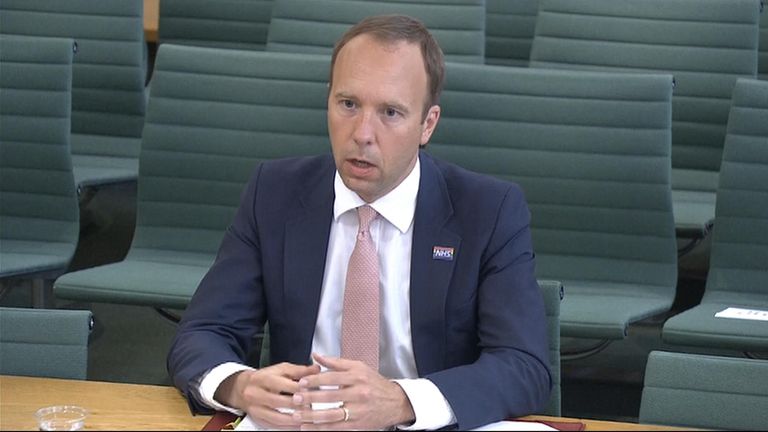
Mr Hancock told the committee that untested discharges contributed to just 1.6% of care home deaths, instead claiming staff might have brought the virus in from the community.
That has angered people like Pearl Jackson, who runs 21 homes across England and has been in care business for nearly 40 years.
"Our experience on the ground is very different," she said. "It was clear it (the COVID infection route) was from hospital and the pressure we were under at that time to take untested discharges was immense.
"I had senior members of staff within hospitals forcing me to take patients without tests. And it seemed to me that the priority was to discharge elderly without tests because they couldn't wait three or four days for a test to come back. They wanted to clear hospital beds as quickly as possible.
"There seems to be a projection of blame on to care homes and that's not justified. We had one person discharged from hospital. Until that moment, we were negative throughout. Within a week 15 residents had COVID.
"I was enraged watching the health secretary. If he came clean and apologised, we would support him. We've tried our best to recover. But he still hides behind blame."
Nicola Richards, managing director at Palms Row Healthcare, witnessed for herself how quickly COVID took over her Sheffield-based care home.
In early March she was warning of a lack of PPE and testing as the pandemic developed.
She told Sky News: "There was a lack of PPE supplies diverted from care homes, so how could homes manage safely with limited supplies.
"Listen to all care providers. We are all saying the same thing. It's not a political debate - people lost their lives unnecessarily.
"I am angry that Mr Hancock said the government tried to protect care homes. They failed our elderly, their loved ones and our staff.
"He simply cannot be allowed to blame staff for spreading the virus. There should have been measures in place to protect them. They put their own lives at risk to care for others. They need to recognise that."

 Posted: Fri Jun 11, 2021 2:34 am