The impact of NHS Test and Trace is still unclear - despite the UK government setting aside £37bn for it over two years, MPs are warning
The Public Accounts Committee said it was set up on the basis it would help prevent future lockdowns - but since its creation there had been two more.
It said the spending was "unimaginable" and warned the taxpayer could not be treated like an "ATM machine".
But Transport Secretary Grant Shapps said the MPs' report "defies logic".
Baroness Dido Harding, head of the National Institute for Health Protection, which runs the system, pointed out it had been built from scratch and was now doing more tests than any other comparable country.
She said performance had been improving with more people who tested positive being reached and more of their close contacts being asked to isolate.
"It is making a real impact in breaking the chains of transmission," she added.
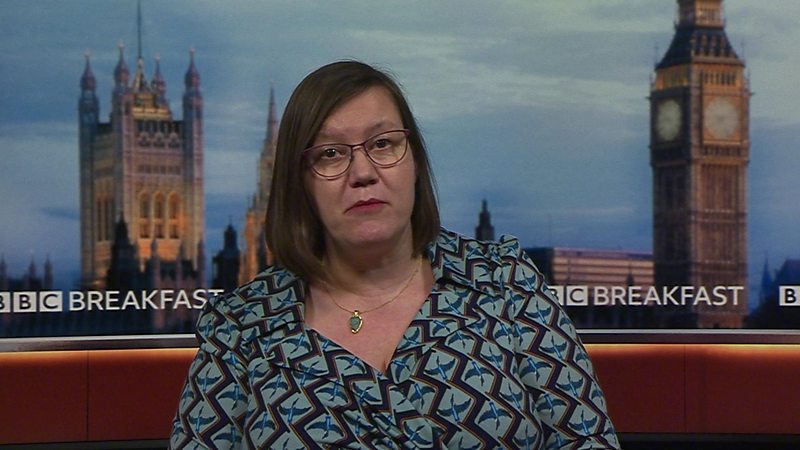
But the MPs' report questioned:Committee chairwoman Meg Hillier [pictured] said it was hard to point to a "measurable difference" the test-and-trace system had made.
- An over-reliance on consultants, with some paid more than £6,600 a day
- A failure to be ready for the surge in demand for tests seen last September
- Never meeting its target to turn around tests done face-to-face within 24 hours
- Contact tracers only having enough work to fill half their time even when cases were rising
- A splurge on rapid tests with no clear evidence they will help
"The promise on which this huge expense was justified - avoiding another lockdown - has been broken, twice," she said.
Labour's Rachel Reeves said the report showed the system had "failed the British people" and underlined the "epic amounts of waste and incompetence" in the way Test and Tace had been set up and run.
Dr Billy Palmer, of the Nuffield Trust think tank, added: "The promise of a world-beating test-and-trace system has just not materialised, and the eye-watering sums of public money poured into this system are set to increase even further."


COVENTRY MESSAGE BOARD
Website is subject to random interference from an unknown source
NHS Test and Trace 'no clear impact' despite £37bn budget
4 posts
• Page 1 of 1
NHS Test and Trace 'no clear impact' despite £37bn budget
 by dutchman » Thu Mar 11, 2021 3:35 am
-

dutchman - Site Admin
- Posts: 59914
- Joined: Fri Oct 23, 2009 1:24 am
- Location: Spon End
Re: NHS Test and Trace 'no clear impact' despite £37bn budget
by rebbonk » Thu Mar 11, 2021 2:26 pm
No different from any government IT project I've ever seen. 
Of course it'll fit; you just need a bigger hammer.
-

rebbonk - Posts: 74455
- Joined: Thu Nov 12, 2009 7:01 am
Re: NHS Test and Trace 'no clear impact' despite £37bn budget
by dutchman » Thu Mar 11, 2021 10:08 pm
My guess is the vaccines will have no impact on the infection rate either as we'll find out when it shoots up after lockdown is eased. 
-
dutchman - Site Admin
- Posts: 59914
- Joined: Fri Oct 23, 2009 1:24 am
- Location: Spon End
Re: NHS Test and Trace 'no clear impact' despite £37bn budget
by rebbonk » Thu Mar 11, 2021 10:53 pm
I'm largely with you there, Dutchman.
And of course next flu season...
And of course next flu season...
Of course it'll fit; you just need a bigger hammer.
-
rebbonk - Posts: 74455
- Joined: Thu Nov 12, 2009 7:01 am
4 posts
• Page 1 of 1
Who is online
Users browsing this forum: No registered users and 17 guests
-
- Ads
Powered by phpBB® Forum Software © phpBB Group
